
Part 1: Where are the Balkans + why visit?
Where are the Balkans?
There’s no single, fixed definition of which countries belong to the Balkans. In most cases, the region is understood to include Albania, Bosnia and Herzegovina, Bulgaria, Croatia, Kosovo, Montenegro, North Macedonia, Serbia, and Slovenia, along with parts of Greece and Turkey.
Geographically, the Balkans lie in Southeastern Europe. The region borders Italy to the northwest and Hungary to the north, with Ukraine and Moldova to the northeast. To the south, it meets the Aegean Sea in Greece and Turkey.
The name “Balkans” originates from the Balkan Mountains, which stretch across eastern Bulgaria and into Serbia. However, the term today refers to a much broader area that covers a large portion of Southeastern Europe.
Why should cyclists visit the Balkans?
Diverse and breathtaking landscapes
The Balkans offer some of the most varied and rewarding cycling terrain in Europe.
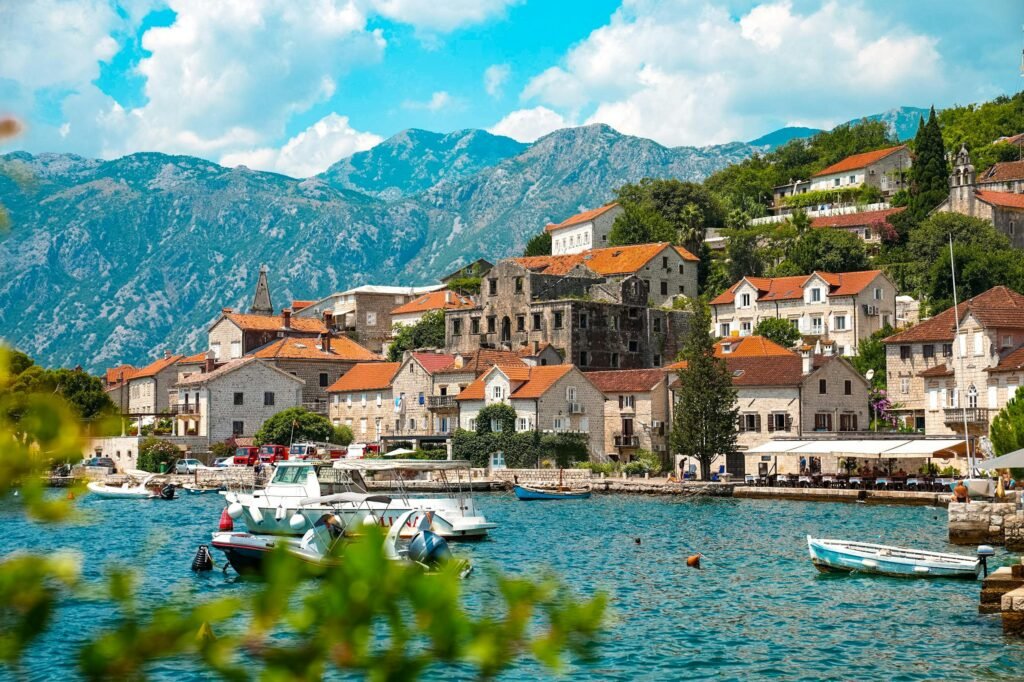
Expect dramatic coastlines, shimmering lakes, rugged mountains, and rolling valleys—all within relatively short distances of each other. Highlights include:
- Riding through the dramatic karst landscapes surrounding Mostar, with quiet roads and wide-open views.
- The spectacular panorama over Kotor Bay from the top of the legendary Serpentine climb above Kotor.
- Cycling the scenic coastal road between Dubrovnik and Herceg Novi, where mountains plunge straight into the Adriatic Sea.
- Exploring the peaceful back-roads around Trebinje, surrounded by vineyards, rivers and rugged limestone hills.
- A loop around the Bay of Kotor, passing through historic towns such as Kotor, Tivat and Herceg Novi.
- Climbing towards Cetinje, Montenegro’s old royal capital, with sweeping mountain vistas along the way.
- The breathtaking Pavlova Strana viewpoint above Lake Skadar, offering one of the most iconic views in the Balkans.
- Wild beauty of the Adriatic coastline near Ulcinj, where long sandy beaches meet rolling hills.
Every stage brings a new backdrop.
Fascinating culture
The towns and cities of the Balkans are vibrant and full of character.
For instance, Novi Sad was the European Capital of Culture in 2022. Serbia’s second-largest city sits on the banks of the Danube and has a youthful, creative energy.
That same blend of history and modern life can be found across the region, including:
- Shkodër, often called the “cycling city” of northern Albania
- The historic lakeside town of Ohrid in North Macedonia
- Bansko, Bulgaria’s well-known ski resort
Across the Balkans, contemporary culture sits comfortably alongside deep-rooted traditions.
Rich history
History enthusiasts will find no shortage of impressive archaeological sites—many of which remain refreshingly free from mass tourism.
One of the most famous examples is Ancient City of Troy in Turkey.
Access rules are increasingly regulated to help preserve these important sites. Visiting hours, entry fees, and restricted areas are common. Interestingly, Turkish citizens have the constitutional right to enter certain historical sites, including Troy, free of charge in the name of education and cultural heritage.
Excellent cycling conditions
Summer brings long, sunny days that are ideal for riding. While coastal areas can become very hot in July and August, higher elevations in the mountains provide cooler, more comfortable conditions.
This variety allows cyclists to plan routes that balance challenge with climate.
Warm hospitality
The Balkans are known for their welcoming people.
Cyclists are often greeted with genuine curiosity and warmth. English is widely spoken, which makes travel and communication straightforward, even across a region with many different local languages.
In remote areas, accommodation may be small and simple—but this is often part of the experience. Expect personal service, heartfelt hospitality, and plenty of character.
Off the beaten track
The Balkans may not be the first destination that comes to mind for a cycling holiday—but that’s part of the appeal.
For riders who have already explored the more established cycling hotspots, the region offers something refreshingly different. It’s an opportunity to discover a lesser-known corner of Europe and experience landscapes, culture, and roads that still feel authentic and uncrowded.